

Principles and History of Infant Massage
Touch is an important way t promote secure parent-child attachment, which is used all over the world. Touch involves the focus of a parent on a child, which directly communicates love, caring, and respect. Touching, holding, hugging, and kissing children enhances children’s development while promoting secure attachment.
Infant massage is one way of expressing love, caring, and respect through touch that has been shown to have many benefits to parent-child attachment and children’s development. Infant massage is something mothers/caregivers do with their infants, not to their infants. It is an interaction that involves gentle strokes that is a benefit to both child and parent.
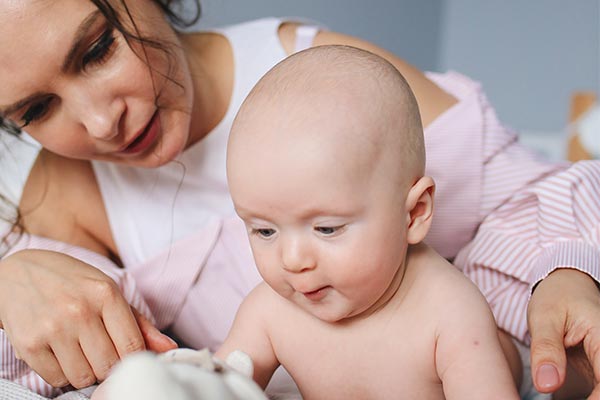
Infant massage is an ancient tradition, it has been used in eastern cultures as far back as 3000BC. Infant massage is being re-discovered in the Western world. Research shows that loving, nurturing contact between mother/caregiver and infant has a positive impact on their development.
Vimala Schneider McClure founded the Association of infant massage following her stay in India in 1973. Vimala fell ill while working in an orphanage, the women of the village helped massage her back to full health.
On her departure she witnessed a mother sitting by the roadside of a shantytown, lovingly massaging her infant on her lap. Vimala spared on by this memory and of her own experiences she decided to bring the techniques of infant massage back to America and wrote a book “Infant massage – A Handbook for Loving Parents”. She combined the techniques she experienced in India with Swedish massage, Chinese reflexology, and yoga.
This infant massage routine is being taught to parents/caregivers internationally in countries such as Sweden, Australia, New Zealand, Great Britain, Germany, and Canada.
Research into infant massage.
Imperial College London, Faculty of Medicine
Report: Massage and mother-baby interaction with depressed mothers, carried out by Fetal and Neonatal Stress Research Group.
Results: Mothers with postnatal depression are known to have a worse relationship with their babies. The aim of this study was to find whether a program for attending mother-baby massage classes would be beneficial. A group who attended five massage classes was compared with a similar group who attended a support group.
At the end of the test period, the massage group had significantly less depression and very significantly better interaction with their babies, than the control group. This is the first time that a method has been found for improving the relationship between a depressed mother and her baby.
Preterm Infants and Massage
Report: Massage of preterm newborns to improve growth and development. Field, T., Scafidi, F., and Schanberg, S. (1987), Pediatric Nursing.
Results: The data reviewed suggest that the growth and development of preterm neonates [newborn infants] can be facilitated by tactile-kinesthetic stimulation.
Greater weight gain and superior performance on developmental assessments persisted across the first six months for the group of infants that received the massage treatment. The field has suggested that these enduring effects may be mediated by better parent-infant interactions. Heightened responsiveness of the neonate may enhance the early parent-infant relationships which may, in turn, contribute to optimal growth and development at later stages in infancy.
- Those babies massaged averaging a 47% more weight gain per day, against those who were not, even though both study groups did not differ on formula intake in volume or calories.
- Those babies massaged were awake and active a greater percentage of time during the sleep/wake behavior observations.
- Those babies massaged showed more mature habituation, orientation, motor, and range of state behavior and on average were hospitalized 6 days less than the non-massaged babies.
- This information was obtained through scientific observation and is supported by other supplemental studies reporting ‘greater weight gain, motor activity, and alertness’ in similar massaged preterm infants.
Eight months on these same babies still showed a weight gain advantage and were performing better on the Bayley Mental and Motor Scales. Superior growth and development thought to result from better parent-infant interaction facilitated by the babies being massaged and more responsive during the newborn period.
The University of Warwick – Infant massage
New research by a team at the University of Warwick says that massage may help infants aged under six months sleep better, cry less, and be less stressed.
The team of researchers from Warwick Medical School and the Institute of Education at the University of Warwick was led by Angela Underdown.
They looked at nine studies of infant massage of young children covering a total of 598 infants aged under six months. They found the various studies showed a range of significant results including indications that infants who were massaged cried less, slept better, and had lower levels of stress hormones such as cortisol compared to infants who did not receive massage.




